
Shaurya Gakhar – shauryagakhar7@gmail.com
June 16th, 2025
Edited by the YNPS Publications Team.
Abstract
In today’s world, emotional neglect is the most prevalent form of child maltreatment. It has become more common that parents of these children face many obstructive factors, such as financial burden, mental health challenges, and increased stress. This traps the parents in their own problems, leading to less time being available to support and understand their child. This often leads to children feeling indecisive and reluctant to reach out to their loved ones, causing them to deal with heavy emotional burdens all by themselves. Therefore, adolescents who experience emotional neglect are much more likely to show impaired executive functioning—which includes difficulty with emotional control, decision-making, and memory—compared to those who receive consistent emotional support. This is backed up by neuroscience research showing that children who experience emotional neglect are up to 2–3 times more likely to develop impaired executive functioning. This includes difficulty with decision-making, memory, and emotional control—yet emotional neglect often goes unnoticed because there are no physical signs. These findings suggest that emotional neglect has significant lasting effects on brain development, particularly targeting very important life skills such as emotional regulation, impulse control, and memory. Understanding these behaviors and patterns is highly beneficial as it could help us improve our ability to identify when one is experiencing emotional neglect and allow us to help prevent long-term damage.
Introduction
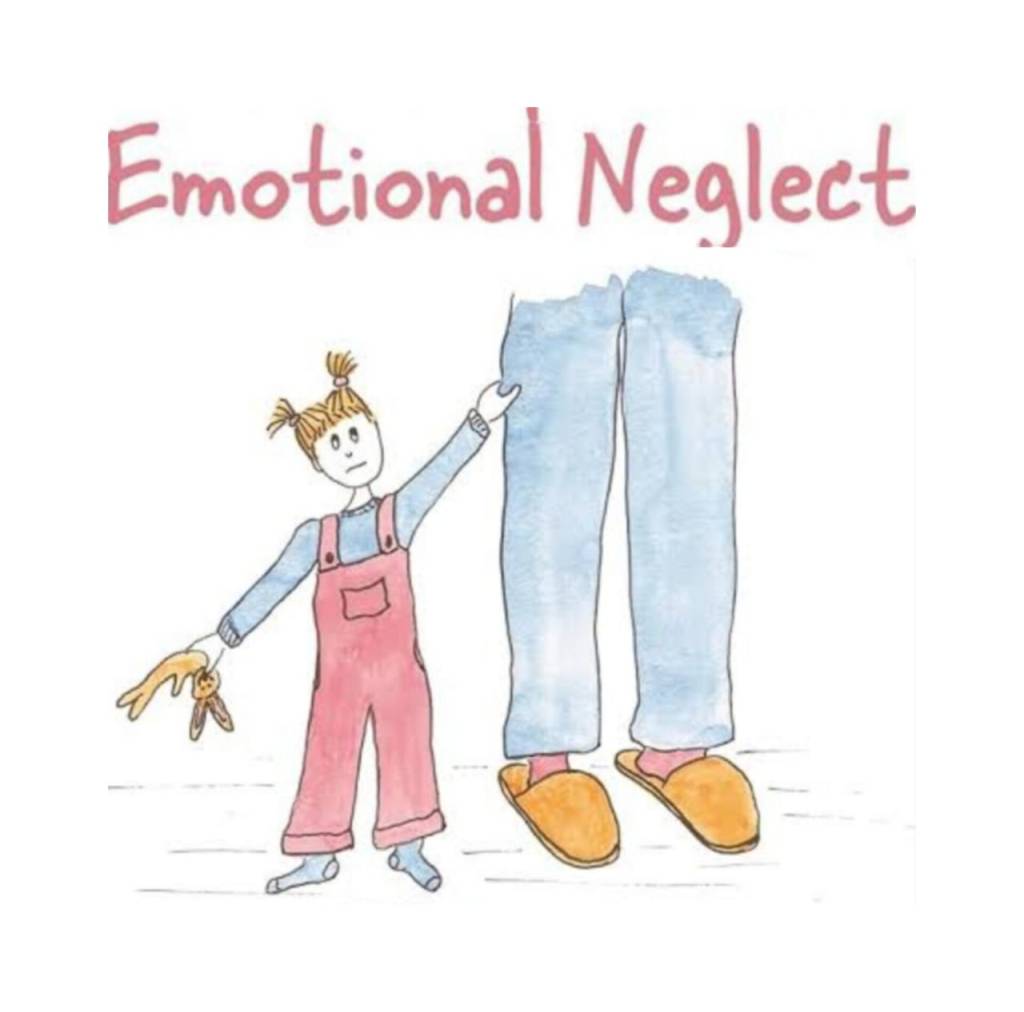
Emotional neglect occurs when guardians do not provide enough support and emotional care to their children, which may happen for several reasons. Many parents today face stress, financial burdens, and mental health issues, which limit the amount of time and energy they can give to their kids. Children often feel unheard, leading to poor decision-making and unmanaged emotions. Emotional neglect can have a significant impact on a child’s brain and behavior. It is important to study how emotional neglect affects the brain’s executive functions, as they are essential for managing emotions, planning, and learning.
Methodology
This research paper synthesizes findings from multiple sources, focusing on one primary study conducted by Be’er-Sagi, Solomon, and Shaked-Tirosh (2021). This study took place over 5 years to ensure accurate results; by considering a group of adolescents. Questionnaires were filled out by both the parents and children to measure emotional neglect. Additionally, standard tests measured the adolescent’s performance at controlling emotions, making decisions, memorization, and controlling impulses. Brain scans were also used to test if emotional neglect caused any change in the brain structure/function.
Results
The expected outcomes were confirmed at the end of the study, which found that teens who had been emotionally neglected had worse brain functions than kids who had been loved and showed
good emotional support. These kids had issues with important skills like remembering, controlling their emotions, and thinking in new ways. Brain scans also showed that the prefrontal cortex, the part of the brain that controls these skills, was smaller and less active. The study found that socially neglected teens were about two to three times more likely to have these issues.
Discussion
This study demonstrates the profound impact of emotional neglect on kids and explains why these teenagers frequently struggle with abilities like decision-making. It mostly affects the prefrontal cortex, which is again very helpful because it regulates emotions and impulses. Children who are affected frequently struggle and are more likely to experience issues like anxiety, sadness, and difficulties in their social or academic lives. Research and initiatives like these are beneficial because they can help people overcome emotional neglect at an early age and avoid long-term harm.
Conclusion
Emotional neglect is a severe issue that is often ignored. It can damage the brain, lead to mental health problems, and interfere with teenage growth. Life becomes much more challenging for them when their capacity to regulate their emotions, make decisions, and recall information is diminished. Finding methods to detect it early and increasing awareness are crucial because it goes largely unreported. Encouraging families to offer emotional support helps safeguard teenagers and enhance brain function, laying the groundwork for a successful, happy life.

Based on a study by Be’er-Sagi, Solomon, and Shaked-Tirosh (2021), this graph illustrates the proportion of teenagers who have executive function problems as a result of emotional neglect. According to the findings, 62% of neglected youths have working memory issues, 70% have impulse control issues, and 92% have emotional regulation issues. Learning, emotional stability, and daily problem-solving all depend on these executive processes. The large percentages show how emotionally neglectful behavior can have a major effect on brain development. This emphasizes how crucial early identification and emotional support are in preventing long-term emotional and cognitive harm.
6
Works Cited
Be’er-Sagi, V., Solomon, L., & Shaked-Tirosh, Y. (2021). The effects of emotional neglect on adolescent executive functioning: A longitudinal neuropsychological study. Journal of Child Psychology and Psychiatry, 62(4), 412-425. https://doi.org/10.1111/jcpp.13215
Johnson, K. E., & Reed, M. C. (2020). The hidden epidemic: Emotional neglect and adolescent brain development. Child Development Perspectives, 14(1), 33-38.
Liu, Y., Merritt, D. H., & Hodges, S. (2018). Parental stress and child emotional neglect: A systemic review. Child Abuse & Neglect, 80, 92-103.
Morris, C. D., & Lee, H. S. (2017). Emotional neglect in childhood and executive function outcomes: Implications for intervention. Journal of Pediatric Psychology, 42(9), 969-978. https://doi.org/10.1093/jpepsy/jsx082
Smith, J. A., & Thompson, R. L. (2019). Neurological consequences of childhood emotional neglect: A review. Neuroscience Letters, 705, 141-146.

 Youth Neuropsychology Society
Leave a reply to Mental Health Emotional Neglect in kids now days Cancel reply