The Spring Research Mentorship Program has concluded! Thank you to our sponsor Porte Global, our amazing Program Team, and of course our wonderful mentees and mentors. We’re so excited to announce the winners and results of our program!
Our sponsor Porte is giving 15% off discounts for the top 19 mentees and a $150 CAD cash prize to give out to the top 3 projects! All 120 mentees should be proud of themselves; we had a 20% acceptance rate for the program.




Peer-Nominated Awards:
Most Dedicated Mentor
Sanjana Sinha (2nd year Psychology Clinical & Research, India)
Distinguished by her patience, clear guidance, and unwavering dedication, Sanjana is a mentor who carefully guides mentees through proper deadlines and demonstrates profound empathy when challenges arise.
Most Dedicated Mentee
Darshana Srivatsan (Grade 11, USA)
Remarkable for their consistent attendance and punctual task completion, Darshana has been nominated for her genuine curiosity to learn more about Alzheimer’s research. Darshana’s peers described her as open to feedback, and exploring resources beyond the guidance given.
Best Researched Project
Afsa Tassnim (Grade 10, UAE): How early life trauma may lead to exaggerated neuroinflammatory responses in neurodegenerative diseases, especially in women.
Praised by multiple mentees in her group, Afsa’s commitment to the program has been exemplary. Quoting from the nominations, Afsa’s contributions went far beyond the expected word, character, and page limit, extending to 40-50 pages.
Most Creative Project
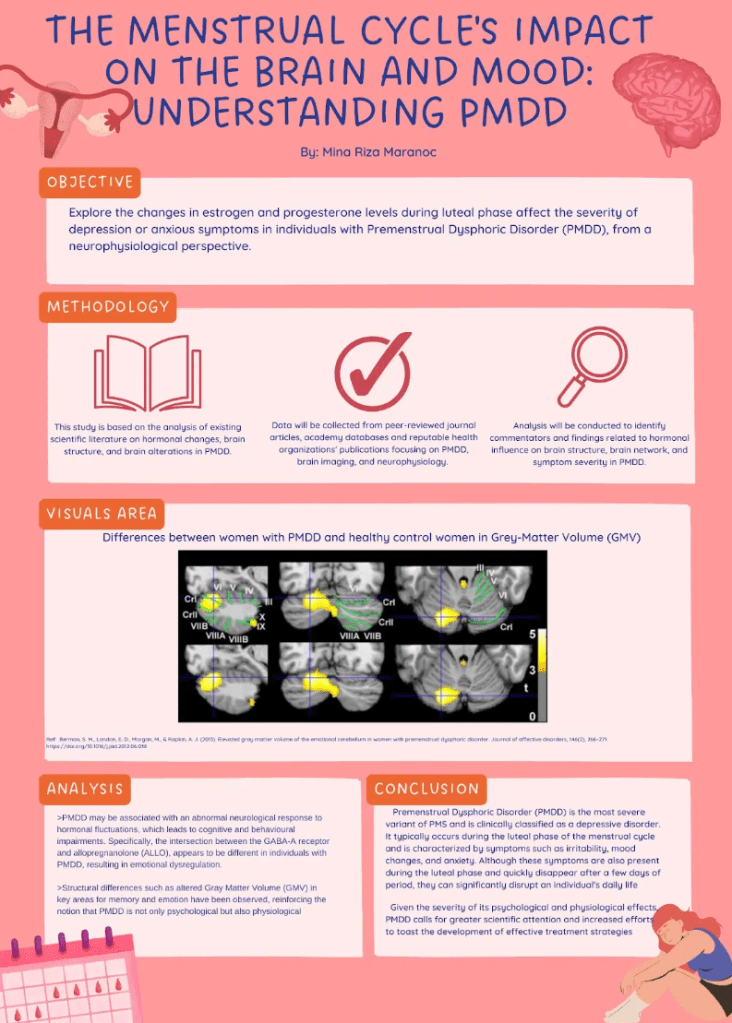
Mina Maranoc (Grade 11, Japan) with mentor Sanjana Sinha
Featuring a field of healthcare that is commonly overlooked, Mina’s research focuses on hormonal fluctuations in the menstrual cycle and advances her studies by investigating their correlation with depressive symptoms.
Best Communication
Janki U Tandon (3rd year Clinical Psychology, India)
Through constant meetings, well-gathered resources, and active communication, Janki has been nominated by several of their mentees for the clear instructions given and her commitment to connect with mentees despite differences in time zones.
Panel-Evaluated Awards:
These 3 participants had incredibly well-put-together research that was enlightening to read through and presented extremely clearly. We could clearly see the level of hard work and dedication put into your projects.
3rd Place Manuscript
Huria Alzena Riaz (Grade 12, UAE) with mentor Deeksha Singh (1st year BSC Honors Psychology, England)
2nd Place Manuscript
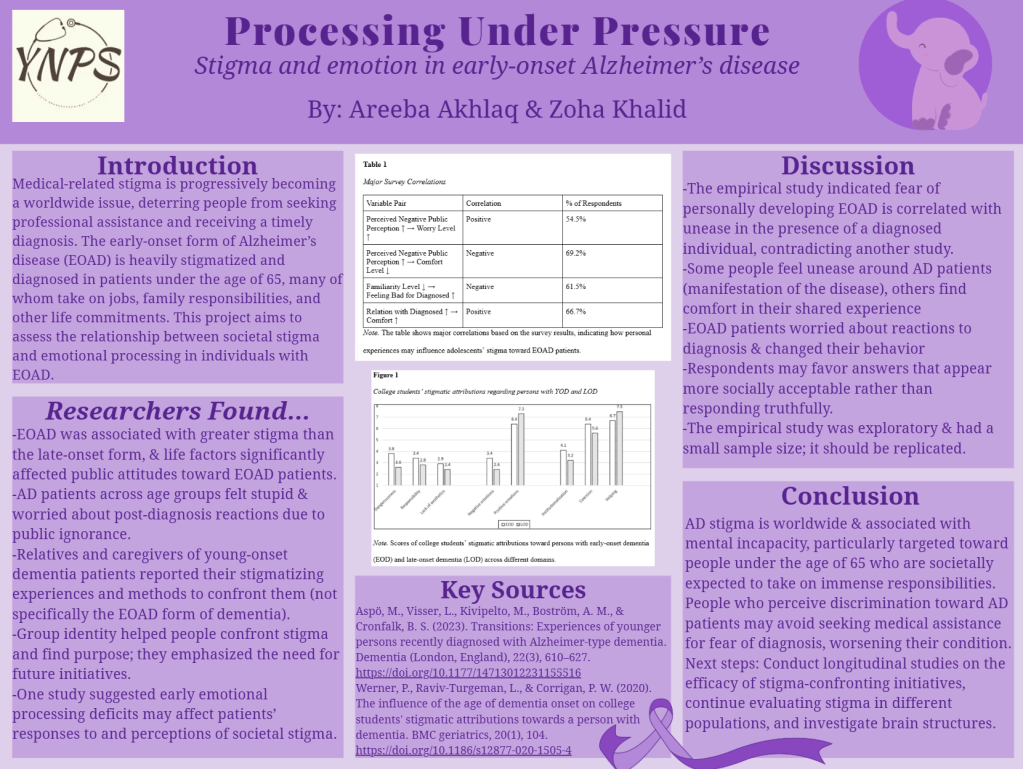
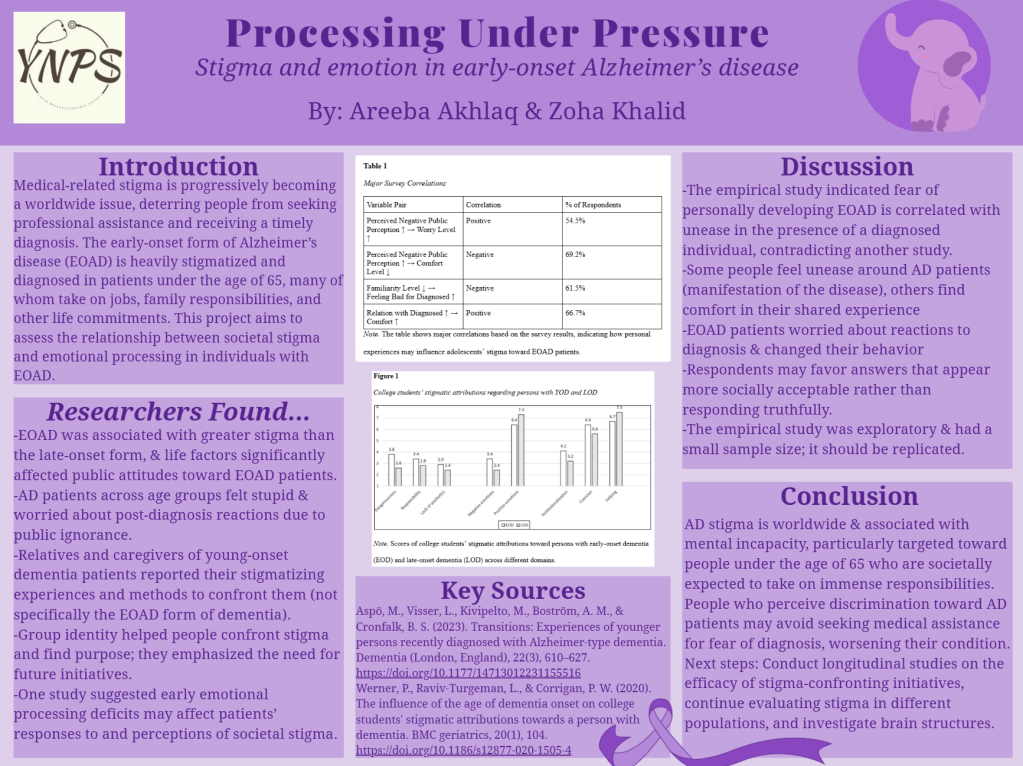
Areeba Akhlaq (Grade 9, USA) with mentor Zoha Khalid (5th year Pharmacy, Pakistan)
Best Manuscript
Umarkhon Uzakov (Grade 9, Uzbekistan) with mentor Oghenefejiro Mercy Esieboma (Post-Grad Mental Health, Nigeria)
Next, we recognize the Top 3 Posters, for those artistic participants who put together their intricate research in a manner that was incredibly well presented. These were very fun to go through, as it gave us a window-like look into the in-depth research you all conducted on your topics.
3rd Place Poster
Eshita Rawle (Grade 12, USA) with mentor Siyeon You (3rd year Interdisciplinary Medical Science, Canada)
Investigating the relationship between chronotype and cancer risk.
2nd Place Poster
Natalie Tjoar (Grade 11, USA) with mentor Anjalika Sachan (2nd year Neuroscience, USA)
Best Poster
Pranika Senthil (Grade 11, USA) with mentor Chloe Wu (1st year Cognitive & Behavioral Neuroscience, USA)
We celebrate our Top 3 Presentations, awarded to those who delivered engaging, professional, and impactful oral presentations on their chosen topics.
3rd Place Presentation
Jianah Pradeesh (Grade 11, USA) with mentor Durdana Azeemi (2nd year Psychology, Pakistan)
2nd Place Presentation
Divya Sharma (Grade 12, USA) with mentor Sophie Jin (2nd year Behavioral Neuroscience, Canada)
Best Presentation
Chenwei Pan (Grade 9, Canada) with mentor Swati Dokania (1st year History, India)
Overall Top 4th to 10th Projects
*Not listed in any particular order
Areeba Akhlaq with mentor Zoha Khalid
Chenwei Pan with mentor Swati Dokania
Evalyn with mentor Paul Jeon
How does circadian misalignment affect behavior and cognitive function?
Huria Alzena Riaz with mentor Deeksha Singh
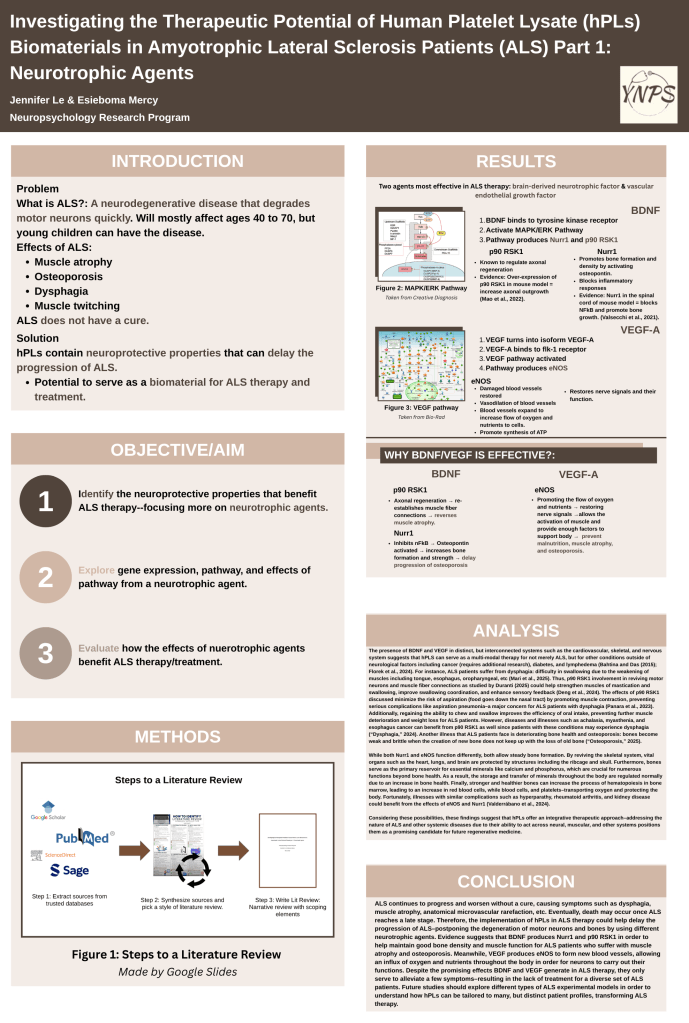
Jennifer Le with mentor Esieboma Mercy
Olivia Fincham Dinsdale with mentor Swati Dokania
Umarkhon Uzakov with mentor Oghenefejiro Mercy Esieboma
Finally, we come to the top three overall projects. These students were truly exceptional. Their work stood out not only in one category but across the entire program. They consistently demonstrated excellence, creativity, and a level of professionalism well beyond expectations.
3rd Place Project
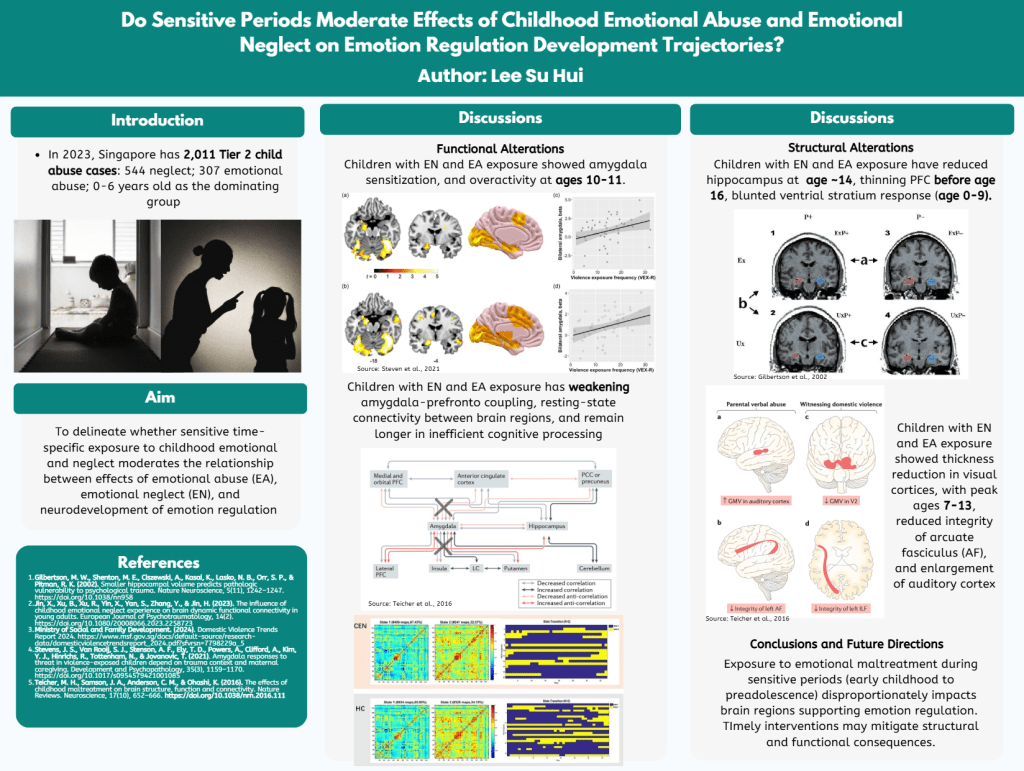
Lee Su Hui (Gap year, Singapore) with mentor Nitin Kumar (4th year Pharmaceutical Sciences, India)
Do Sensitive Periods Moderate Effects of Childhood Emotional Abuse and Emotional Neglect on Emotion Regulation Development Trajectories?
2nd Place Project
Aaron John Tan (Grade 12, Qatar) with mentor Caitrin Burke (2nd year Psychology, Canada)
Preliminary Exploration of Nine-Class EEG Emotion Recognition with the FACED Dataset.
Best Project
Rez Samantha Floresca (Grade 12, Philippines) with mentor Sidra Syed (2nd year Psychology, Pakistan)
What to expect?
Duration: 8 weeks, weekly sessions lasting 2 hours each
Dates: July to August 2025
Format: virtual sessions
Application
(Closed for now, stay tuned for the winter 2025 cohort!)

Skills covered:
Research Basics
Scientific Writing
Data Analysis
Experimental Design
Time management
Organization
Collaboration
Teamwork
Building a lasting network, offering hands-on research experience, and inspiring the next generation of neuropsychologists are the core mission of the YNPS Research Mentorship Program. At its heart lies a simple yet ambitious goal: to advance and diversify the field of neuropsychology by providing students with a gateway to academic exploration, immersive research opportunities, and exclusive mentorship.
It is with great enthusiasm that I invite you to apply for the Youth Neuropsychology Society Research Mentorship Program. Whether you are a high school student with a keen interest in academic writing or a university student with prior research experience, the RMP is a perfect experience for any looking to expand their knowledge or network.
We look forward to welcoming any students who are ready to take on the challenge and explore your possibilities within research.
Your research journey starts here.
Sherlynn Fung, Founder and CEO
What is the Research Mentorship Program?
The RMP is an 8-week long program designed to equip students with the necessary skills for academic research, by pairing high school students with experienced undergraduate mentors in the fields of medicine, neuroscience, and psychology. Mentees will choose a topic and, with continuous guidance from the mentors, write and present a review paper. Professionals in the field will be invited to give lectures on critical topics.
“Research is seeing what everybody else has seen and thinking what nobody else has thought.”
– Albert Szent-Györgyi
Info about the 2025 Summer Program!
- 120 Mentees
- 20% acceptance rate
- Mentors and Mentees from top 30 universities
- Develop your personalized project through YNPS-led sessions and mentor guidance.
 Youth Neuropsychology Society