
Olivia Fincham Dinsdale – ofincham-dinsdale@elmwood.ca
September 2nd, 2025
Edited by the YNPS Publications team.
Abstract:
This secondary research paper explores the therapeutic potential of modulating newly identified misfolded proteins in the treatment of Alzheimer’s disease and related dementias. This paper focuses on a study that was executed at Johns Hopkins on 07/11/2025 and suggests that its findings may have relevance to developing therapeutic processes. Key findings from the study include 200+ proteins that have experienced cognition-associated structural changes (CASCs). This was found by using Limited proteolysis mass spectrometry (LiP), the Morris Water Maze (MWM) cognitive assessment, liquid chromatography tandem MS (LC-MS/MS), and label-free quantification (LFQ). A number of these proteins identified in the study are associated with aging, memory, and synaptic health, while others represent earlier targets that were disregarded for therapeutics or further study. These findings may allow scientists to learn more about the brain, which may contribute to creating new treatments.
Introduction:
Proteins are essential macromolecules that carry out the majority of cellular functions and maintain the structure, regulation, and metabolism of the body’s tissues and organs (“What Are Proteins and What Do They Do?”, 2025).
There is a direct relationship between protein structure and function (Whyte, 2023). A protein’s ability to bind to specific molecules, catalyze biochemical reactions, and interact with other proteins is determined by its sequence of amino acids (Whyte, 2023).
Variations in protein structure can alter function (Whyte, 2023). When constituent amino acids fold incorrectly, proteins function improperly. Changes in protein structure from environmental factors, mutations, and post-translational modifications may disrupt the protein’s functional properties and result in disease or altered/impaired function (Whyte, 2023).
The gradual collection of misfolded proteins can lead to amyloid diseases (disorders that occur when proteins become misshapen clumps), the most prevalent being Alzheimer’s disease (AD) (Ashraf et al., 2014). These diseases may be familial or sporadic, and their incidence greatly increases with age (Ashraf et al., 2014). The underlying mechanism is that aging increases oxidative and mutational stress, which alters protein structure (Ashraf et al., 2014). This disrupts the delicate balance of protein synthesis, folding, and degradation, leading to the production and accumulation of misfolded proteins (Ashraf et al., 2014).
The study of proteins is significant as it may allow scientists to learn more about the brain, which can contribute to creating new treatments for AD and related diseases. This paper will explore the therapeutic potential of modulating newly identified misfolded proteins in the treatment of AD and related dementias.
Methodology:
This is a secondary research paper, meaning that it will contain analyzed and synthesized research on a topic, rather than new data collection. The data is based on the study titled: “Proteins with cognition-associated structural changes in a rat model of aging exhibit reduced refolding capacity” executed at Johns Hopkins on 07/11/2025 (Study) (Tarbox et al., 2024).
In the Study, Long-Evans rats were maintained in a controlled environment with a regulated diet until they reached 24 months of age (Tarbox et al., 2024). The Study includes 3 young rats, 7 AI (aged-impaired) rats, and 10 AU (age-unimpaired) rats (Tarbox et al., 2024). Limited proteolysis mass spectrometry was used to perform proteome-wide profiling (Tarbox et al., 2024). This technique involves incubating native lysates with a nonspecific protease, which differentiates subtle structural changes over numerous proteins in a complex mixture (Reber & Gstaiger, 2023).
Approximately 2 weeks after a Morris Water Maze (MWM) cognitive assessment, the hippocampal tissue was dissected into CA1, CA3, and dentate gyrus (DG) (Tarbox et al., 2024). The subfields were dounce homogenized, after which cellular debris and membranes were depleted (Tarbox et al., 2024). The resulting soluble fractions were subjected to LiP with proteinase K for 1 minute (Tarbox et al., 2024).
To identify the locations of the cute sites, the samples were trypsinized, and the resulting peptides were analyzed by liquid chromatography tandem MS (LC-MS/MS) (Tarbox et al., 2024). The abundant changes of the resulting tryptic (and half-tryptic) peptides were explained in terms of continued structural changes (Tarbox et al., 2024). During sample prep, label-free quantification (LFQ) was executed on 19-20 samples per condition (Tarbox et al., 2024). The analyses were done separately for each of the three hippocampal subfields (Tarbox et al., 2024).
LiP was then used to create half-tryptic peptides, which show persistent structural changes (Tarbox et al., 2024). There were slightly fewer proteins/peptides identified in LiP runs because
of the proteolytic treatment (Tarbox et al., 2024). Moreover, there was consistent protein/peptide identification across cohorts, runs, and subfields (Tarbox et al., 2024).
Parallel samples were then processed without the LiP step (trypsin-only) to acquire total protein abundance (Tarbox et al., 2024). These control samples were used to normalize LiP-derived peptide abundance ratios (Tarbox et al., 2024).
This paper identifies key findings from the Study and extracts comments from other reports (GEN, ScienceDaily, and Medical Press) commenting on the Study in order to focus on the therapeutic potential of modulating newly identified misfolded proteins in the treatment of Alzheimer’s disease and related dementias.
Results:
The results of the Study showed over 200 proteins that misfolded in the cognitively impaired rats, yet held their shape in the cognitively healthy rats (“Many More Misfolded Proteins May Contribute to Alzheimer’s and Dementia than Previously Identified”, 2025). These misfolded
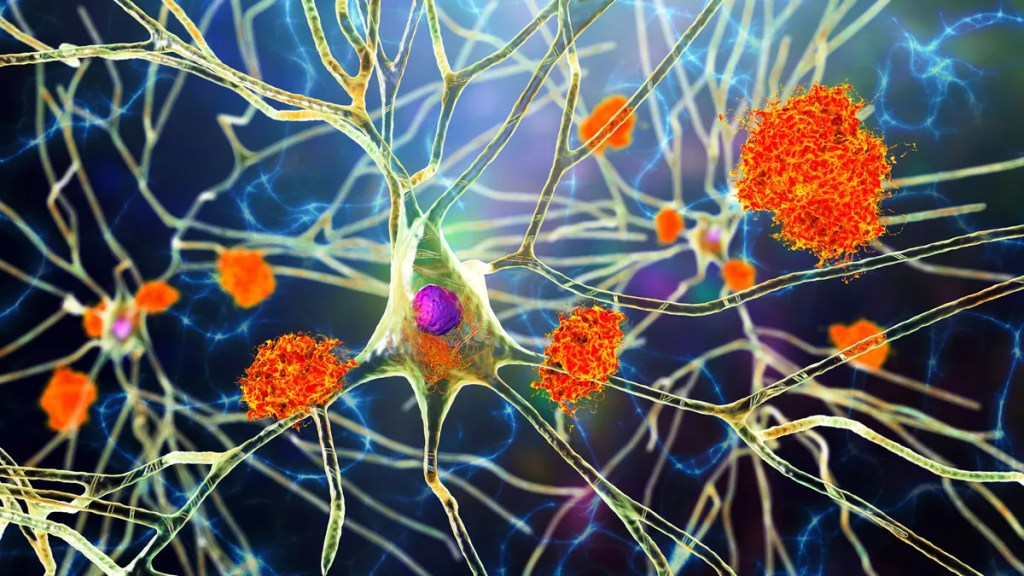
proteins may be associated with age-related cognitive decline (“Many More Misfolded Proteins May Contribute to Alzheimer’s and Dementia than Previously Identified”, 2025). The picture below is an illustration of a proteasome that was taken by the Fried Lab at Johns Hopkins University.
.

Figure 1: “Graphic rendition of a proteasome, which breaks down misfolded and damaged proteins inside a cell” (“Scientists Just Found 200+ Hidden Proteins That May Drive Alzheimer’s.”, 2025)
Discussion:
The research question that will be explored is: What is the therapeutic potential of modulating newly identified misfolded proteins in the treatment of Alzheimer’s disease and related dementias?
The Study’s findings suggest that some of these newly identified proteins may contribute to cognitive decline (Robbins, 2025). Several of these proteins are involved in aging, memory, and synaptic health. Research in dementia, aging, and neurodegenerative disease has made a connection between protein misfolding and disease processes (Robbins, 2025). Notably, some of these proteins had been previously disregarded as therapeutic or diagnostic targets, likely because they do not aggregate into easily detectable amyloids like Aβ or tau (Robbins, 2025).
Many misfolded proteins may not form amyloids, making them harder to detect (Robbins, 2025). This suggests that these misfolded proteins can escape the “surveillance system” of the cell (Robbins, 2025). However, it is unknown how misfolded proteins evade the proteostasis network (Robbins, 2025).
A valuable comparison includes previous discovery of the EAG2-Kvβ2 protein interaction in glioblastoma, which led to the creation of a designer peptide that disrupts EAG2-Kvβ2 interaction, consequently mitigating tumour (Dong et al, 2023).
Current studies are using high-resolution imaging to uncover structural deformities in these misfolded proteins (Robbins, 2025). In addition, structural proteomics is a rising ‘omics’ method that dissects features associated with progressive age-related cognitive loss (“Many More Misfolded Proteins May Contribute to Alzheimer’s and Dementia than Previously Identified”, 2025). Additional structural and mechanistic studies on specific CASC proteins may influence some of the proteins to be reviewed as early disease biomarkers or therapeutic targets (“Many More Misfolded Proteins May Contribute to Alzheimer’s and Dementia than Previously Identified”, 2025).
Studying specific proteins may allow scientists to better understand what is physically happening in the brain, which in turn could lead to improved treatments and preventive measures. By characterizing their structural and functional disruptions, scientists may identify new therapeutic strategies that restore proteostasis or prevent neurotoxicity (“Many More Misfolded Proteins May Contribute to Alzheimer’s and Dementia than Previously Identified”, 2025).
One such treatment is modulating misfolded proteins, which is the process of influencing the behaviour of proteins that have folded incorrectly into their proper three-dimensional structure (“Protein Structure Modulation”). This helps to improve protein degradation (Wang et al., 2020). Autophagy is a cellular process that breaks down and removes misfolded proteins (Barmaki et al., 2023). Dysregulation of autophagy is involved in Alzheimer’s, and improving autophagy may clear toxic protein aggregates (Barmaki et al., 2023). Another significant protein degradation pathway is the proteasome (George & Tepe, 2021). Strategies to enhance proteasome function may reduce the accumulation of misfolded proteins (George & Tepe, 2021).
Conclusion:
Johns Hopkins has identified 200+ proteins that have experienced cognition-associated structural changes (CASCs), which may lead to finding new therapeutic targets and treatments for the elderly (+65).
Potential next steps include continuing research to develop therapies that prevent misfolded proteins from forming, influence their proper folding, or improve their clearance from the cell.
References:
References
Ashraf, G. M., Greig, N. H., Khan, T. A., Hassan, I., Tabrez, S., Shakil, S., Sheikh, I. A., Zaidi, S. K., Wali, M. A., Jabir, N. R., Firoz, C., Naeem, A., Alhazza, I. M., Damanhouri, G. A., & Kamal, M. A. (2014). Protein misfolding and aggregation in Alzheimer’s disease and type 2 diabetes mellitus. CNS & Neurological Disorders – Drug Targets, 13(7), 1280–1293. https://doi.org/10.2174/1871527313666140917095514
Barmaki, H., Nourazarian, A., & Khaki-Khatibi, F. (2023). Proteostasis and neurodegeneration: A closer look at autophagy in Alzheimer’s disease. Frontiers in Aging Neuroscience. Retrieved July 30, 2025, from https://www.frontiersin.org/journals/aging-neuroscience/articles/10.3389/fnagi.2023.1281338/full
Creative Biolabs. (n.d.). Protein structure modulation. Retrieved July 30, 2025, from https://www.creative-biolabs.com/Modulating-Protein-Structure.html#:~:text=Protein%20structu re%20modulation%20means%20to,the%20intended%20function%20in%20mind
Dong, W., Fekete, A., Chen, X., Liu, H., Beilhartz, G. L., Chen, X., Bahrampour, S., Xiong, Y., Yang, Q., Zhao, H., Kong, T., Morioka, M. S., Jung, G., Kim, J. E., Schramek, D., Dirks, P. B., Song, Y., Kim, T. H., He, Y., Wanggou, S., … Huang, X. (2023). A designer peptide against the
EAG2-Kvβ2 potassium channel targets the interaction of cancer cells and neurons to treat glioblastoma. Nature Cancer, 4(10), 1418–1436. https://doi.org/10.1038/s43018-023-00626-8
George, D. E., & Tepe, J. J. (2021). Advances in proteasome enhancement by small molecules. Biomolecules, 11(12), 1789. https://doi.org/10.3390/biom11121789
GEN. (2025, July 12). Many more misfolded proteins may contribute to Alzheimer’s and dementia than previously identified. GEN – Genetic Engineering and Biotechnology News. https://www.genengnews.com/topics/translational-medicine/many-more-misfolded-proteins-may -contribute-to-alzheimers-and-dementia-than-previously-identified/
Johns Hopkins University. (2025, July 12). Scientists just found 200+ hidden proteins that may drive Alzheimer’s. ScienceDaily. Retrieved August 13, 2025, from www.sciencedaily.com/releases/2025/07/250711224328.htm
MedLinePlus. (2021, March 26). What are proteins and what do they do? MedLinePlus Genetics. https://medlineplus.gov/genetics/understanding/howgeneswork/protein/
Reber, V., & Gstaiger, M. (2023). Target deconvolution by limited proteolysis coupled to mass spectrometry. In S. Gstaiger & R. Aebersold (Eds.), Methods in molecular biology: Vol. 2706. Target deconvolution (pp. 177–190). Humana. https://doi.org/10.1007/978-1-0716-3397-7_13
Robbins, B. (2025, July 11). Many more misfolded proteins may contribute to Alzheimer’s and dementia than previously identified. Johns Hopkins University. https://www.genengnews.com/topics/translational-medicine/many-more-misfolded-proteins-may-contribute-to-alzheimers-and-dementia-than-previously-identified/
Tarbox, H. E., Branch, A., & Fried, S. D. (2024). Cognition-associated protein structural changes in a rat model of aging are related to reduced refolding capacity. bioRxiv. https://doi.org/10.1101/2024.09.20.614172
Wang, L., Xu, X., Jiang, Z., & You, Q. (2020). Modulation of protein fate decision by small molecules: Targeting molecular chaperone machinery. Acta Pharmaceutica Sinica B, 10(10), 1904–1925. https://doi.org/10.1016/j.apsb.2020.01.018
Whyte, B. (2023, July 20). Misfolded proteins and neurodegenerative diseases. BMG LABTECH. Retrieved July 30, 2025, from https://www.bmglabtech.com/en/blog/misfolded-proteins-and-neurodegenerative-diseases/
 Youth Neuropsychology Society
Leave a comment