
Olivia Fincham Dinsdale – ofincham-dinsdale@elmwood.ca
July 5th, 2025
Edited by the YNPS Publications Team.
Abstract:
The research topic that will be explored is the relationship between psychiatric disorders and brain tumors, and related diagnostic challenges. This relationship is important to explore as psychiatric disorders are sometimes not considered or recognized as a symptom of brain tumors, which can lead to a misdiagnosis and delayed treatment. This was explored through a review of several papers, including one that considers challenges of diagnosis, specifically when psychiatric symptoms obscure the presence of a brain tumor, and is framed as the main issue. Key findings include that 27% of brain tumor patients have psychiatric symptoms, which can disrupt diagnosis (Sharma, Das, Jain, Purohit, Solanki, & Gupta, n.d.). Brain tumors can present as psychiatric symptoms and yet be neurologically silent (Betul, O., & Ipek, M.). The recognition of the relationship between brain tumors and psychiatric disorders can be applied to the clinical implications for early detection and suitable management for patients with psychiatric symptoms of a potential brain tumor.
Introduction:
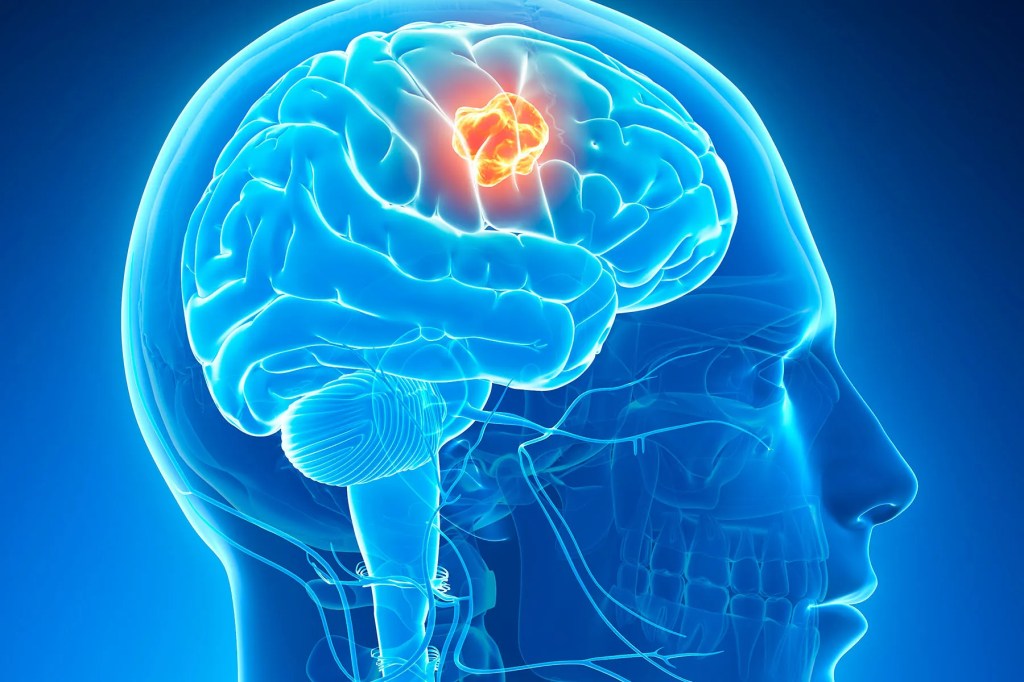
Brain tumors are the abnormal growths that occur within or near the brain, including the surrounding brain tissue such as nerves, the pineal gland, the pituitary gland, and the membranes that cover the brain’s surface, as illustrated in Figure 1 (M. C. S.).

Figure 1: “Understanding Brain Anatomy: A Detailed Look at the Parts of the Brain and Their Functions” (A. S.)
There are over 120 different types of brain tumors, which are categorized by their occurrence and the type of cells they contain (Johns Hopkins Medicine, n.d.). These include primary tumors (originating in the brain with many different kinds) and secondary or metastatic tumors (originating from cancer elsewhere in the body, which spread to the brain) (M. C. S.). Tumors may be malignant, which grow rapidly and invade the surrounding brain structure, or benign, which grow slowly without invading nearby tissue (M. C. S.).
Across the many different types of brain tumors, gliomas, meningiomas, pituitary tumors, and embryonal tumors are particularly significant as they have a potential impact on mental health, interfering with brain function and presenting psychiatric symptoms (such as abulia, apathy, anxiety, depression, psychosis, mania) (Prasad, L. G. (n.d.)).
Multiple factors make diagnosing brain tumors challenging at the early stages. The majority of the initial symptoms are vague and appear to be more common, resembling other, more common and harmless illnesses (Wilne, S. H., Ferris, R. C., Nathwani, A., & Kennedy, C. R.). Particularly when psychiatric symptoms present, they do not readily appear as pathognomonic features of brain tumors, and so the “underlying organic” factor can be overlooked, making the diagnosis challenging in the early stages (Ghandour et al., 2021). This affects the treatment of brain tumors.
The paper that will be reviewed is a case study titled “Psychiatric manifestations of brain tumours: A clinical study” (PMC9771634) with the research problem being the challenges of diagnosis, specifically when psychiatric symptoms obscure the presence of a brain tumor, and is framed as the main issue. Moreover, the purpose is to learn about the relationship between psychiatric effects and brain tumors. A thorough review will be given to the diagnostic challenges presented by symptoms and the clinical implications for early detection and suitable management of patients with psychiatric symptoms of a potential brain tumor.
Methodology:
This is a secondary research paper, meaning that it will contain analyzed and synthesized research on a topic, rather than new data collection. The data has been gathered from the following case studies titled “Study of Association of Various Psychiatric Disorders in Brain Tumors” (PMC9771634), “Neuropsychiatric Manifestations of a Frontal Lobe Meningioma: A Case Report” (PMC11438519), and the “New-onset psychiatric symptoms following intracranial meningioma in a patient with schizophrenia: a case study” (PMC6781699). The research from the case study titled “Study of Association of Various Psychiatric Disorders in Brain Tumors” gathered data on 176 brain tumor patients aged 18 or above who were recently diagnosed with a brain tumor. Patients with a long history of brain tumors or psychiatric illness, or other severe illnesses were excluded from the study (Sharma, Das, Jain, Purohit, Solanki, & Gupta, n.d.).
The research from the case study titled “New-onset psychiatric symptoms following intracranial meningioma in a patient with schizophrenia: a case study” focused on a 52-year-old woman who suffered from schizophrenia for 20 years and who sustained remission of positive symptoms for 15 years using effective pharmacotherapy. A preoperative computed tomography (CT) scan showed the brain tumor, and a magnetic resonance imaging (MRI) scan showed the removal of the brain meningioma (Trevizol et al., 2019).
The research from the case study titled “Brain Tumor Presenting With Psychiatric Symptoms” gathered data from a 50-year-old man with anxiety and depression who did not respond to the treatment for 7 years. He was examined by a neurologist following complaints of a headache. An MRI scan was then performed and showed a glial tumor in the left temporal lobe. The research from the case study titled “Neuropsychiatric Manifestations of a Frontal Lobe Meningioma: A Case Report” gathered data on a 56-year-old male with no history of prior mental illnesses who had exhibited depressive symptoms, social withdrawal, and disinhibition for three weeks. Neuroimaging was conducted and showed a large extra-axial mass in the anterior cranial fossa. CT and MRI scans then confirmed a hyperdense mass lesion. (Bokhari, Elnoor, Al Mansour, Mustafa, & Osman, 2024).
Results:
In the case study titled “Study of Association of Various Psychiatric Disorders in Brain Tumors”, it was found that 27% of brain tumor patients had psychiatric symptoms, with depressive symptoms being the most common. Psychiatric symptoms were most often
associated with peritumoral edema and malignant tumors. Among malignant tumors, depressive symptoms were related to high-grade glioma, and among benign tumors, they were more common in meningioma. No specific tendency toward one side or anatomical lobe was reported (Sharma, Das, Jain, Purohit, Solanki, & Gupta, n.d.).
The case study titled “New-onset psychiatric symptoms following intracranial meningioma in a patient with schizophrenia: a case study” highlights the diagnostic challenge posed by overlapping psychiatric symptoms and organic pathology. In this case, persecutory delusions and disorganized thinking were initially interpreted as a relapse of schizophrenia, which caused the correct diagnosis to be delayed. A patient who had schizophrenia for 20 years, with a sustained remission of positive symptoms for 15 years under effective pharmacotherapy (olanzapine 20 mg daily), presented with new onset of persecutory delusions, anhedonia, decreased appetite, disorganized speech, and suicidal ideation over 2 weeks, caused by a large left frontoparietal meningioma. The removal of this tumor led to the recovery of psychiatric stability (Trevizol et al., 2019).
The case study titled “Brain Tumor Presenting With Psychiatric Symptoms” reported a patient whose brain tumor presented solely with psychiatric symptoms and no neurological signs. The patient had been treated unsuccessfully for 7 years for depression and anxiety without developing any significant neurological symptoms. He was reviewed by a neurologist, as he had a headache. An MRI scan was performed, and a glial tumor was found in the left temporal lobe (Betul, O., & Ipek, M.).
The final case study, titled “Neuropsychiatric Manifestations of a Frontal Lobe Meningioma: A Case Report”, reported on a patient with no history of prior mental illnesses who had exhibited depressive symptoms, social withdrawal, and disinhibition for three weeks. Neuroimaging
showed a “large extra-axial mass in the anterior cranial fossa,” which indicates a meningioma. CT and MRI scans then confirmed a hyperdense mass lesion, which causes structural erosion and a midline shift. (Bokhari, Elnoor, Al Mansour, Mustafa, & Osman, 2024). These cases highlight how brain tumors may present with psychiatric symptoms without neurological signs.
Discussion:
The first case study provides some support for the proposition that psychiatric symptoms may be related to brain tumors, the appreciation of which can be taken into account as part of the diagnosis. Psychiatric symptoms (such as mood changes) can mimic or overlap with symptoms from a brain tumor, particularly if the tumor is in the frontal or temporal lobes (Boele et al., 2015). The second case study highlights how overlapping psychiatric symptoms and organic pathology can disrupt the diagnosis of a brain tumor (Trevizol et al., 2019). Symptoms may be overlooked in patients with chronic psychiatric conditions, delaying consideration of an underlying brain tumor. The third case study illustrates that brain tumors may only present as psychiatric symptoms and be neurologically silent; therefore, psychiatric symptoms may be crucial in the diagnostic process (Betul, O., & Ipek, M.).
From these studies, it can be argued that psychiatric symptoms should be considered as part of the clinical implications of brain tumors for early detection. Brain tumors may present a wide range of psychiatric symptoms, which may be the only presentation of a brain tumor (Sharma, Das, Jain, Purohit, Solanki, & Gupta, n.d.). Consequently, clinicians should have an index of suspicion of brain tumors in cases of patients having acute psychiatric symptoms, atypical
presentations, and treatment resistance (Madhusoodanan et al., 2007). Further, there should be an early diagnosis for these patients as it is significant for the treatment and quality of life (Madhusoodanan et al., 2007).
These findings may also be used to inform the management of patients with psychiatric symptoms that are potentially caused by brain tumors. Firstly, there should be neuroimaging, as MRI and CT scans are crucial for diagnosing brain tumors. The last case demonstrates the importance of neuroimaging in atypical psychiatric cases. Secondly, pharmacological treatment may be needed to manage psychiatric symptoms, but should be carefully evaluated in the context of the tumor and its treatment. Lastly, psychotherapy can allow patients to deal with the psychological and emotional challenges of a brain tumor.
Finally, these studies suggest the need to address the challenges with diagnosing brain tumors in the presence of psychiatric symptoms through improved diagnostic protocols, tools, and collaboration. These challenges are currently managed through routine neuroimaging and interdisciplinary collaboration between neurologists, psychiatrists, and oncologists. In the future, clinicians may incorporate new/developing screening tools that include: AI-powered diagnostics, Rapid Genetic Testing, and Personalized Blood Tests. AI-powered diagnosis includes FastGlioma (an AI-based diagnostic system that improves the overall management of patients with diffuse gliomas) and DeepGlioma (“an AI-based diagnostic screening system that detects a brain tumor’s genetic mutations”) (Fromson, N). Rapid Genetic Testing includes the ROBIN test (decreases the waiting time for diagnosis by 6-8 weeks using nanopore sequencing) (Kountcheva, K.). Personalized Blood Tests include TriNetra-Glio (isolates tumor cells that have escaped from the tumor circulating in the blood)(B. T. R.) and personalized blood tests for high-grade gliomas (observes the development of high-grade gliomas) (Murphy, S.). Interdisciplinary diagnosis includes early suspicion, neuroimaging (CT and MRI), and psychiatric symptoms as indicators.
Conclusion:
There can exist a strong but often under-recognized connection between brain tumors and psychiatric symptoms. In many cases, brain tumors may be neurologically silent and only present with psychiatric symptoms (Betul, O., & Ipek, M.). This highlights the need for increased clinical awareness and earlier suspicion of brain tumors, especially in cases with atypical psychiatric symptoms or resistance to standard treatments. A visual overview of common signs and symptoms is provided in Figure 2.

Figure 2: Recognize the signs & symptoms of brain tumor (K. D. A. H.)
Further studies using larger populations would deepen our understanding of how brain tumors affect psychiatric symptoms, which can allow for more effective diagnostic tools, therapies, and treatments for patients.
Works Cited
A. S. (2024). Understanding Brain Anatomy: A Detailed Look at the Parts of the Brain and Their Functions [Photograph]. Everyday Health. https://www.everydayhealth.com/healthy-aging/understanding-brain-anatomy/
B. T. R. (2024, January 19). Blood test breakthrough for glioblastoma brain tumours. Retrieved June 20, 2025, from https://braintumourresearch.org/blogs/latest-news/blood-test-breakthrough-for-glioblastoma-brai n-tumours#:~:text=The%20TriNetra%2DGlio%20blood%20test,Related%20reading:
Betul, O., & Ipek, M. (2011). Brain Tumor Presenting With Psychiatric Symptoms. The Journal of Neuropsychiatry and Clinical Neurosciences, 23(4), E43E44. https://doi.org/10.1176/jnp.23.4.jnpe43
Boele, F. W., Rooney, A. G., Grant, R., & Klein, M. (2015). Psychiatric symptoms in glioma patients: From diagnosis to management. Neuropsychiatric Disease and Treatment, 11, 1413. https://doi.org/10.2147/NDT.S65874
Bokhari, S. A., Elnoor, M., Al Mansour, A., Mustafa, K., & Osman, A. (2024). Neuropsychiatric Manifestations of a Frontal Lobe Meningioma: A Case Report. Cureus, 16(8), e68101.https://doi.org/10.7759/cureus.68101
Fromson, N. (2024, November 13). In 10 seconds, AI model detects cancerous brain tumor often missed during surgery. Retrieved June 20, 2025, from https://www.michiganmedicine.org/health-lab/10-seconds-ai-model-detects-cancerous-brain-tum or-often-missed-during-surgery
Ghandour, F., Squassina, A., Karaky, R., Diab-Assaf, M., Fadda, P., & Pisanu, C. (2021).
Johns Hopkins Medicine (n.d.). Brain Tumor Types. Retrieved June 20, 2025, from https://www.hopkinsmedicine.org/health/conditions-and-diseases/brain-tumor/brain-tumor-types
K. D. A. H. Recognize the signs & symptoms of brain tumor [Photograph]. Kokilaben Dhirubhai Ambani Hospital. https://navimumbai.kokilabenhospital.com/health/healthtip/recognize-the-signs-and-symptoms-o f-brain-tumour.html
Kountcheva, K. (2025, May 22). New test could speed up brain tumour diagnosis and treatment. Retrieved June 20, 2025, from https://www.epilepsy.org.uk/news/new-test-could-speed-up-brain-tumour-diagnosis-and-treatme nt#:~:text=A%20team%20of%20scientists%20and,8%20weeks%20with%20current%20methods .
M. C. S. (2024, December 19). Brain Tumor. Retrieved June 20, 2025, from https://www.mayoclinic.org/diseases-conditions/brain-tumor/symptoms-causes/syc-20350084
Madhusoodanan, S., Danan, D., & Moise, D. (n.d.). Psychiatric manifestations of brain tumors: Diagnostic implications. Retrieved June 20, 2025, from https://www.researchgate.net/publication/51389683_Psychiatric_manifestations_of_brain_tumor s_Diagnostic_implications#:~:text=Abstract,undertaking%20such%20a%20prospective%20stud y
Murphy, S. (2025, April 23). Mayo Clinic researchers reveal personalized approach to brain cancer monitoring. Retrieved June 20, 2025, from https://newsnetwork.mayoclinic.org/discussion/mayo-clinic-researchers-reveal-personalized-appr oach-to-brain-cancer-monitoring/#:~:text=Share%20this:,D.
Prasad, L. G. (n.d.). Commentary. Journal of Neurosciences in Rural Practice. Retrieved June 20, 2025, from https://ruralneuropractice.com/commentary-14/?utm_source=chatgpt.com
Presenting Psychiatric and Neurological Symptoms and Signs of Brain Tumors before Diagnosis: A Systematic Review. Brain Sciences, 11(3), 301. https://doi.org/10.3390/brainsci11030301
Sharma, A., Das, A. K., Jain, A., Purohit, D. K., Solanki, R. K., & Gupta, A. (2022). Study of Association of Various Psychiatric Disorders in Brain Tumors. Asian journal of neurosurgery, 17(4), 621–630. https://doi.org/10.1055/s-0042-1757437
Trevizol, A. P., Cerqueira, R. O., Brietzke, E., & Cordeiro, Q. (2019). New-onset psychiatric symptoms following intracranial meningioma in a patient with schizophrenia: a case study. Revista brasileira de psiquiatria (São Paulo, Brazil : 1999), 41(1), 91–92. https://doi.org/10.1590/1516-4446-2018-0055
Wilne, S. H., Ferris, R. C., Nathwani, A., & Kennedy, C. R. (2006). The presenting features of brain tumours: A review of 200 cases. Archives of Disease in Childhood, 91(6), 502. https://doi.org/10.1136/adc.2005.090266
 Youth Neuropsychology Society
Leave a comment